
Canopy and debris
Leaves, seed pods, pollen, and plant cuttings can load the skimmer and settle into organic material.
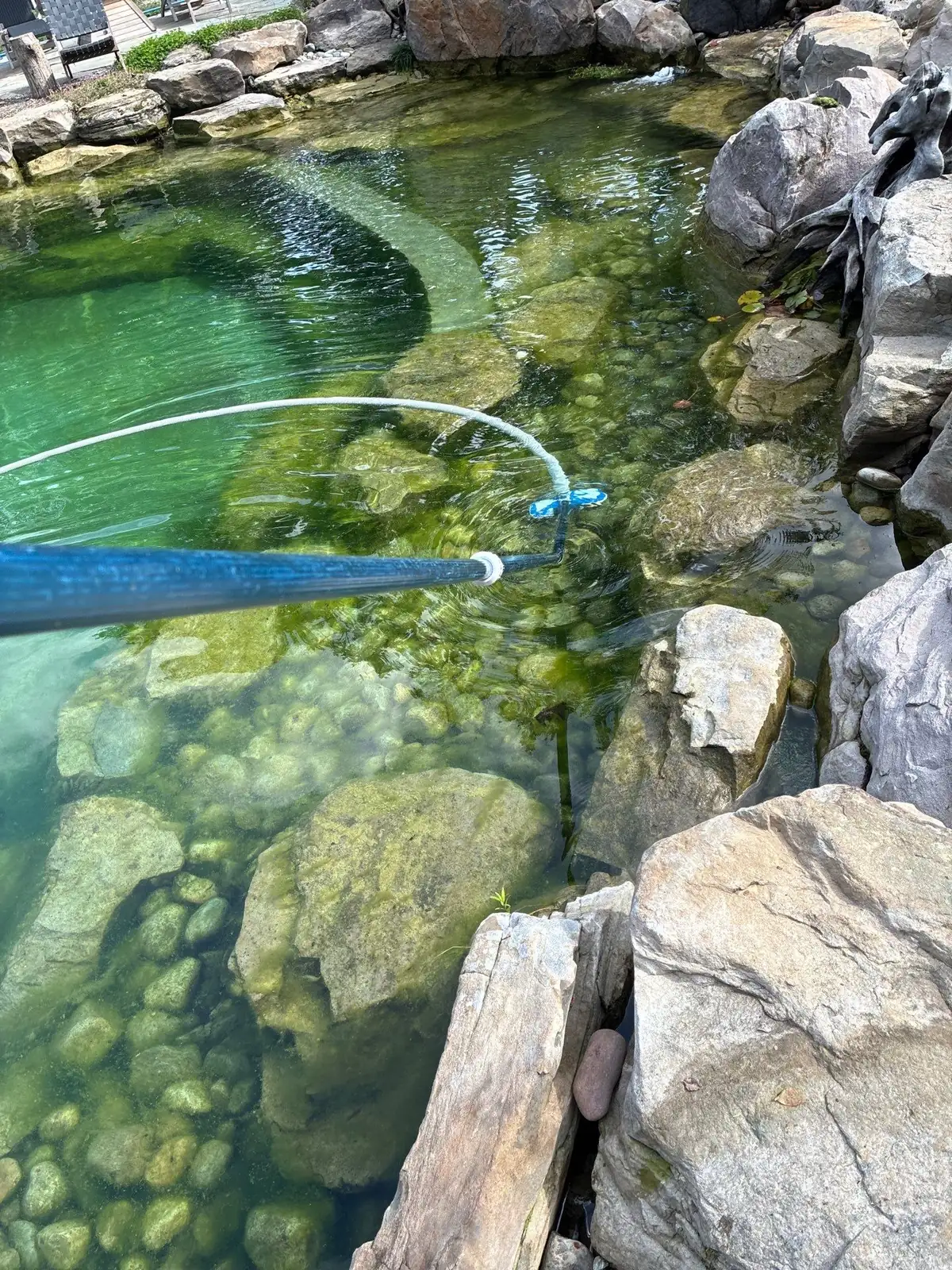
Routine and seasonal care for Greenville ponds, with practical attention to filtration, leaf debris, fish health, algae pressure, and changing water levels.
On Greenville properties with mature canopy, layered planting beds, stone edges, or sloped lawn, a pond can collect far more than surface leaves. Pollen, fine sediment, mulch, and decaying plant material can reach the water and place steady demand on the pump and filter.
Warm summer water can increase algae pressure and reduce available oxygen, especially when circulation slows or fish load is high. Heavy rain can move fine material toward an unprotected edge. Then fall leaf drop adds another organic load before pumps, plants, aeration, and fish care shift for cold weather.
If the pond came with the property and its service history is unclear, the first priority is a baseline assessment—not an automatic recurring schedule. Rock Water Ponds looks at the system as a whole, then recommends routine visits, focused seasonal care, a pond cleanout, or leak diagnostics when one of those is the better first step.
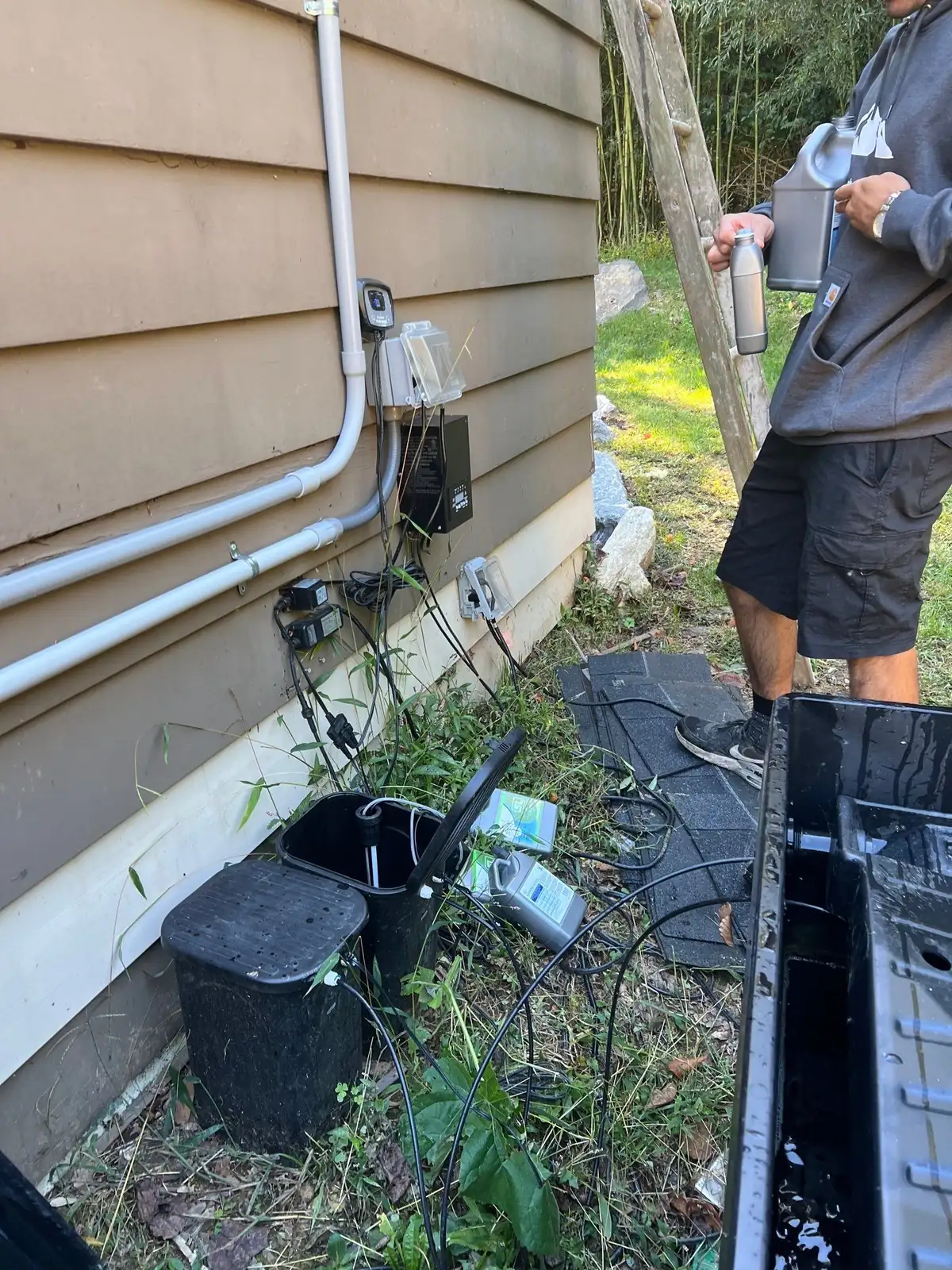
The service plan should respond to what is entering the pond, how the system is moving water, and what the fish and plants are showing.
Leaves, seed pods, pollen, and plant cuttings can load the skimmer and settle into organic material.
Warm water, fish activity, algae, and restricted flow can combine into a stressful system.
Sloped beds and hardscape can send fine sediment or nutrients toward an unprotected pond edge.
Feeding, plants, aeration, pumps, and de-icing all need seasonally appropriate decisions.
Similar symptoms can come from very different causes. Matching the service to the condition avoids treating water clarity while missing a circulation, sludge, or water-loss problem.
Best for ongoing debris control, filter care, plant trimming, equipment checks, water-quality observation, and seasonal adjustments.
See the maintenance serviceConsider a cleanout when bottom waste, odor, poor visibility, or long-deferred care prevents normal maintenance from holding stable conditions.
Learn about pond cleanoutsUse diagnostics when the level keeps falling, wet areas appear, or the loss changes depending on whether the pump and waterfall are running.
Review leak diagnosticsMaintenance pricing depends on the pond's size and type, access to the water and equipment, current debris and sludge, fish load, filtration, seasonal conditions, and visit frequency. A pond that is already stable has a different scope from one that first needs a cleanout, equipment correction, or leak investigation. Rock Water Ponds estimates the work around the actual pond rather than applying one price to every property.
Water clarity alone does not show whether filtration, circulation, fish load, and organic material are in balance. A first visit creates a practical record of what the pond needs now and what should be watched next.
Rock Water Ponds provides pond care in Greenville and nearby communities across northern New Castle County. View all service areas, or choose a nearby location or seasonal service below.
The right schedule depends on the pond size, fish load, shade, surrounding plants, and filtration. Many ponds benefit from a spring opening, active-season checkups, fall debris control, and winter preparation, with more frequent care when leaves or fish waste build up quickly.
The scope depends on the pond, season, and current condition. A visit may include checking pump flow, skimmer and filter condition, water clarity, algae, fish behavior, plant growth, debris, sludge, edges, and the water level. Repairs, full cleanouts, and leak diagnostics are separate services when the pond needs more than routine care.
Pricing depends on pond size and type, access, current condition, fish load, filtration, visit frequency, seasonal debris, and whether the pond needs a one-time cleanout or repair before routine service begins. Rock Water Ponds provides an estimate for the actual pond and requested scope.
Often, but the cause matters. A maintenance visit can address clogged filters, excess debris, plant balance, circulation, and other common contributors. Heavy bottom sludge, undersized equipment, or an established water-quality problem may call for a pond cleanout or a broader filtration review.
A cleanout may be the better starting point when deep organic material, persistent odor, very poor visibility, or neglected equipment prevents routine service from restoring stable conditions. Rock Water Ponds can assess the pond before recommending either recurring care or a one-time cleanout.
Mark the water level, note how quickly it drops, and record whether the pump is running when the loss occurs. Normal evaporation varies with weather, but repeatable water loss, wet ground, or a falling level near the skimmer may need leak diagnostics rather than maintenance alone.
Yes. When the pond's service history is unknown, the first visit can establish a baseline for the pump, filtration, circulation, plant growth, fish load, bottom debris, and water level. That assessment helps determine whether routine maintenance is the right starting point or whether the pond first needs a cleanout, filtration correction, or leak investigation.
Tell Rock Water Ponds what you are seeing—water clarity, debris, fish behavior, equipment issues, or water loss—and whether the pond has a known service history.