
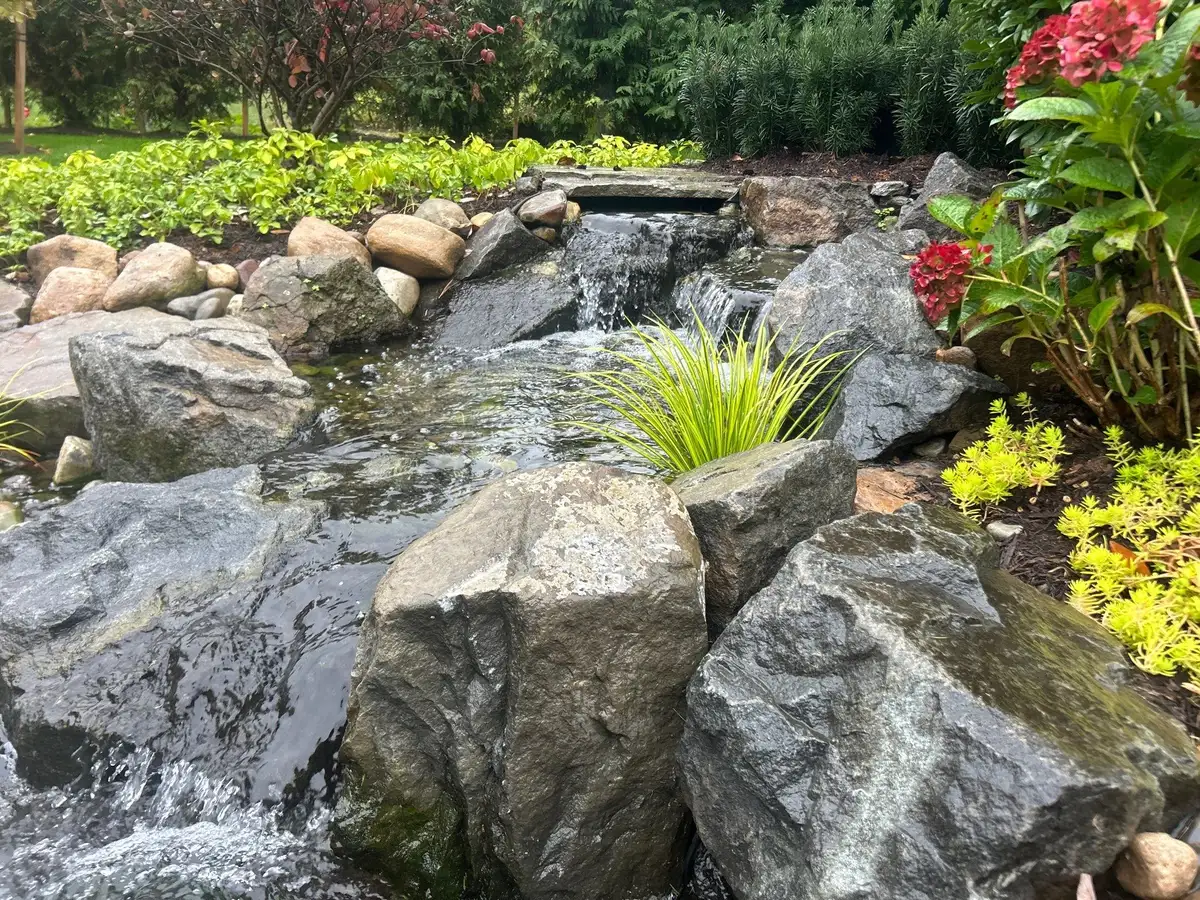
The most useful question before booking pond maintenance is not simply “Does the pond need cleaning?” It is “What condition am I trying to correct?” Clear photos, a short service history, and a few observations about water level, flow, fish, plants, and bottom debris help match the first visit to the actual problem.
What Does a Pond Maintenance Visit Include?
The answer should be specific to your pond. Routine care may include checking water level and clarity, circulation and waterfall flow, accessible filters and skimmers, floating debris, aquatic plant growth, fish behavior, and visible changes around the liner edge or equipment. Ask which cleaning, testing, and adjustments are part of the proposed visit and whether replacement parts or repairs are separate.
A working pond that needs recurring care is different from a neglected pond with deep organic buildup. It is also different from a feature that is losing water. Rock Water Ponds offers pond maintenance, pond cleanouts, and leak diagnostics; describing the symptoms makes it easier to start with the right service.
How Much Does Pond Maintenance Cost?
Pond maintenance pricing follows the work required, not the city name alone. Pond dimensions, depth, fish load, filtration type, access to the pump and filter, plant growth, debris or sludge, equipment condition, and time since the last service can all change the scope. A small, regularly maintained feature and a large inherited koi pond should not be expected to require the same visit.
Before comparing estimates, confirm what each one covers. Is it for routine maintenance, an initial condition assessment, a seasonal service, or a full cleanout? Ask how disposal, fish protection, water handling, replacement parts, and follow-up recommendations are treated. That makes comparisons more useful than looking at a single total without the service details.
Should Sludge Be Removed From the Bottom?
Accumulated organic material should be evaluated, but not every visible leaf calls for draining the pond. Light, reachable debris may fit within routine maintenance. A deep layer of fine sediment or decomposing material can reduce usable depth, cloud the water when disturbed, and add demand to circulation and filtration.
Tell the provider whether the bottom material looks like loose leaves, string algae, fine sediment, or thick sludge. Mention odor, reduced flow, and whether fish are present. If buildup is widespread or the pond has gone a long time without service, ask whether a controlled cleanout is more appropriate than stirring debris through a running system.
Who Should Handle Pond Maintenance?
Homeowners can often manage observation and light tasks they already understand: removing surface debris, checking the water level, or emptying an accessible basket according to the equipment instructions. Those small checks also make it easier to notice a change before it becomes a larger problem.
Professional service is the better fit when the work involves fish protection, deep sludge, unfamiliar filtration, pumps or electrical components, a large seasonal cleanout, or persistent water loss. Avoid reaching into equipment or making electrical checks around water. If fish are gathering near moving water, circulation has stopped, or equipment is exposed by a falling water level, describe that when you call so the concern can be triaged.
How Do Wilmington Conditions Affect the Visit?
Tree cover, sloped yards, plant growth, warm water, and hard rain can change the debris and runoff pressure around a Wilmington pond. Early fall is a useful time to look ahead: if leaf drop is heavy, fall netting may reduce the amount of organic material reaching the water. If soil, mulch, or muddy water enters during storms, cleaning the pond may address the result without addressing the drainage source.
Repeated topping-off deserves separate attention. Mark the water level, note whether the pump was running, and record how quickly it changed. Evaporation and splashing can affect a pond, but steady or rapid loss may need a diagnostic visit. The Wilmington service-area guide connects local homeowners with the full range of pond and water-feature services available in the area.
What Should You Ask Before Confirming the Appointment?
- What is this visit intended to solve? Routine upkeep, heavy buildup, poor flow, and water loss call for different starting points.
- Which tasks are included? Confirm the checks, cleaning, adjustments, and debris handling in the proposed scope.
- How will fish be protected? Share the type and approximate number of fish before work that may disturb or lower the water.
- What can change the scope? Hidden sludge, inaccessible equipment, failing components, or an unidentified leak may change the recommendation.
- What should happen after the visit? Ask what to monitor, what routine care remains, and when the pond should be checked again.
What Information Should You Send With a Service Request?
Share the Wilmington service address, a full view of the pond, and clear photos of the waterfall, skimmer, filter, pump area, and any visible problem. Note whether fish are present, when the pond was last serviced, what changed, and how quickly the change occurred. Mention reduced flow, unusual pump noise, odor, algae, bottom buildup, repeated topping-off, or runoff after rain.
Those details help separate recurring pond maintenance in Wilmington from a cleanout or diagnostic visit. If regular active-season and seasonal care is the goal, you can also review the maintenance membership options. When you are ready, contact Rock Water Ponds to request an estimate or call (484) 844-3863.