
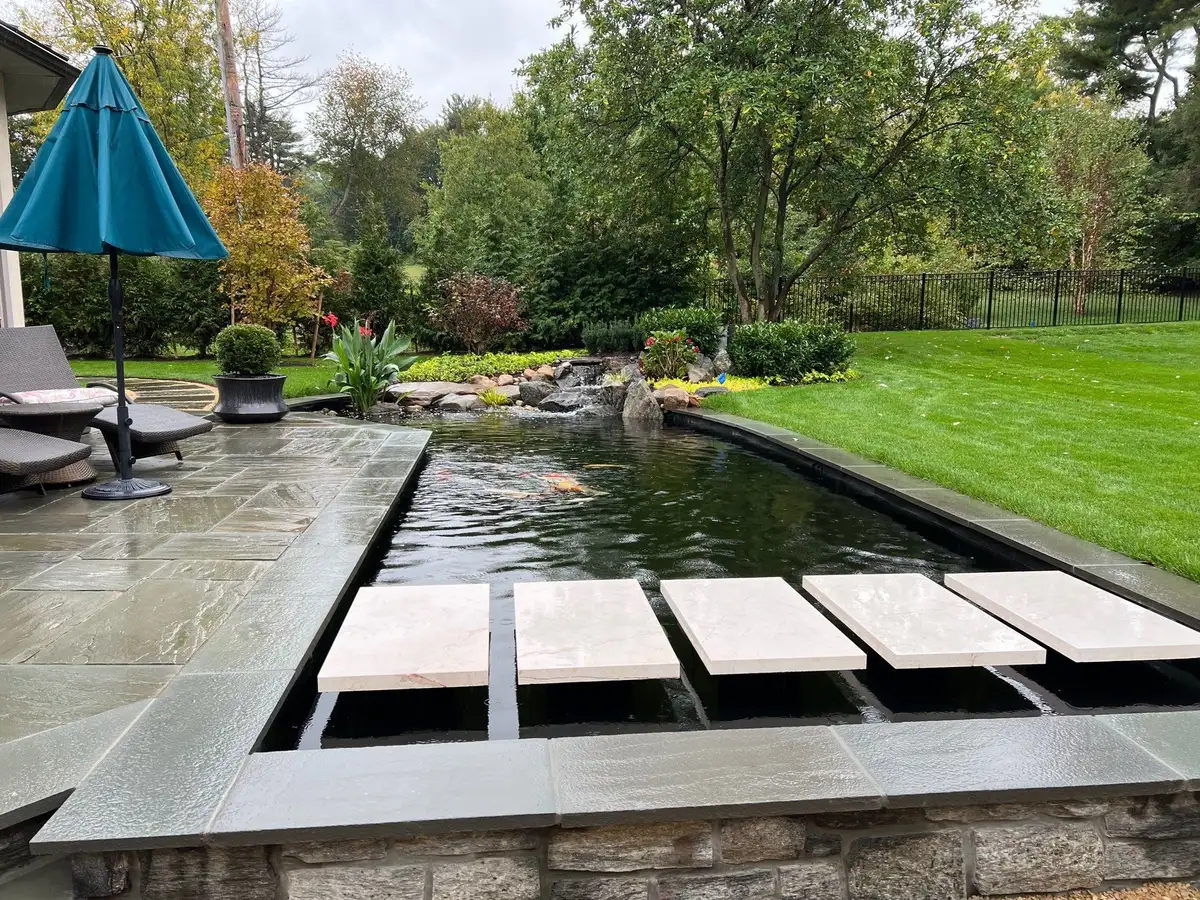
A useful pond-maintenance estimate starts with more than “the water looks bad.” Wilmington homeowners can get a clearer recommendation by describing what changed, how the equipment is behaving, whether fish are present, and how water moves around the property after rain.
The questions below help distinguish routine care from a cleanout, leak diagnostic, or drainage-related service. They also make it easier to compare the scope of a proposed visit before booking.
What Does a Pond Maintenance Visit Include?
There is no universal visit checklist because ponds differ in size, fish load, filtration, plant growth, surrounding trees, and access. Depending on the system and its condition, maintenance may involve checking water level and clarity, observing fish behavior, reviewing pump and waterfall flow, cleaning accessible skimmers or filters, removing reachable debris, and noting plant or edge concerns.
Ask which tasks are included, which components will only be inspected, and what would require separate approval. For example, clearing a skimmer basket is not the same scope as replacing a pump, and removing floating leaves is not the same as addressing a deep layer of bottom sludge. The pond maintenance service page explains the ongoing-care path, while the local page covers pond maintenance in Wilmington, DE.
Who Should Handle Pond Maintenance?
Homeowners can often handle observation and light tasks they understand: watching the water level, removing surface debris, or emptying an accessible basket according to the equipment instructions. Those small checks are valuable because they help establish what is normal for the pond.
Professional help is the better fit when a visit may involve fish relocation, deep sludge, unfamiliar filtration, electrical or pump concerns, recurring water loss, heavy plant overgrowth, or a large cleanout. If the pond was inherited with the property and its service history is unknown, an assessment is more useful than assuming it needs either a quick cleaning or a complete drain-down.
How Is Pond Maintenance Cost Determined?
Pond size and depth matter, but they do not tell the whole story. Access to the water and equipment, fish load, filtration type, plant growth, debris volume, sludge depth, current water condition, disposal needs, and the time since the last service can all change the work required.
Ask whether the estimate covers a defined maintenance visit, a condition assessment, or a larger corrective service. Photos of the entire pond, pump, filter, skimmer, waterfall, and any problem area help provide context. A short service history—when it was last cleaned, what has changed, and whether equipment has been replaced—can be just as important as the photos.
Should Sludge Be Removed From the Bottom?
Accumulated organic material should not be ignored, but the response should match the amount and condition. A small quantity of loose leaves in a reachable area may be manageable during routine maintenance. A deep layer of fine sediment or decomposing debris can reduce usable depth, cloud the water when disturbed, and add load to circulation and filtration.
Describe whether the material looks like loose leaves, string algae, fine sediment, or thick sludge. Also mention odor, reduced flow, and whether fish are present. Long-neglected buildup may call for a planned pond cleanout with clear steps for protecting fish and restarting equipment, rather than ordinary maintenance.
How Often Should a Wilmington Pond Be Maintained?
Frequency follows the pond, not a fixed calendar. A lightly stocked feature away from mature trees may need a different schedule from a koi pond with heavy plant growth or regular leaf drop. Filtration capacity, shade, debris pressure, and how the system changes through the seasons all affect the recommendation.
Before booking, ask whether the proposed plan is a one-time visit, seasonal care, or recurring active-season maintenance. Also ask what signs should trigger an earlier call: reduced waterfall flow, a noisy pump, repeated topping-off, persistent odor, rapid algae growth, or fish gathering near moving water. The Wilmington service-area page provides a broader view of available pond and water-feature services.
Could Runoff or Water Loss Change the Service You Need?
Yes. A pond problem can be connected to how water moves through the feature or across the property. If muddy runoff, mulch, or sediment enters after rain, cleaning the pond may address the symptom without correcting the source. That condition may warrant a broader stormwater management conversation.
Repeated or rapid water loss is a different signal. Record the water level, note whether the loss changes when the pump is on or off, and look for safely visible wet areas or low edges. Do not assume the liner has failed. A focused leak diagnostic may be the right first service when topping off has become frequent.
What Should You Ask Before Approving the Visit?
- What is the visit intended to solve? Routine upkeep, a condition assessment, heavy buildup, low flow, and water loss are different starting points.
- What is included? Confirm the cleaning, inspection, testing, adjustment, and debris-handling tasks in the proposed scope.
- How will fish be handled? Tell the provider what fish are present before any service that may disturb the water or reduce its level.
- What could change the scope? Hidden sludge, inaccessible equipment, failing components, or an unidentified leak may require a revised recommendation.
- What happens after the visit? Ask what to monitor, which routine tasks remain, and when the pond should be checked again.
What Information Helps Rock Water Ponds Recommend the Right First Step?
When you contact Rock Water Ponds, share the Wilmington service address, full-pond and equipment photos, whether fish are present, the last known service date, and the change you want evaluated. Mention unusual pump noise, reduced flow, odor, bottom buildup, repeated topping-off, or runoff entering after rain.
That information does not replace an on-site assessment, but it helps separate routine Wilmington pond maintenance from a cleanout, leak diagnostic, or other service. Use the contact form to request an estimate, or call (484) 844-3863.