
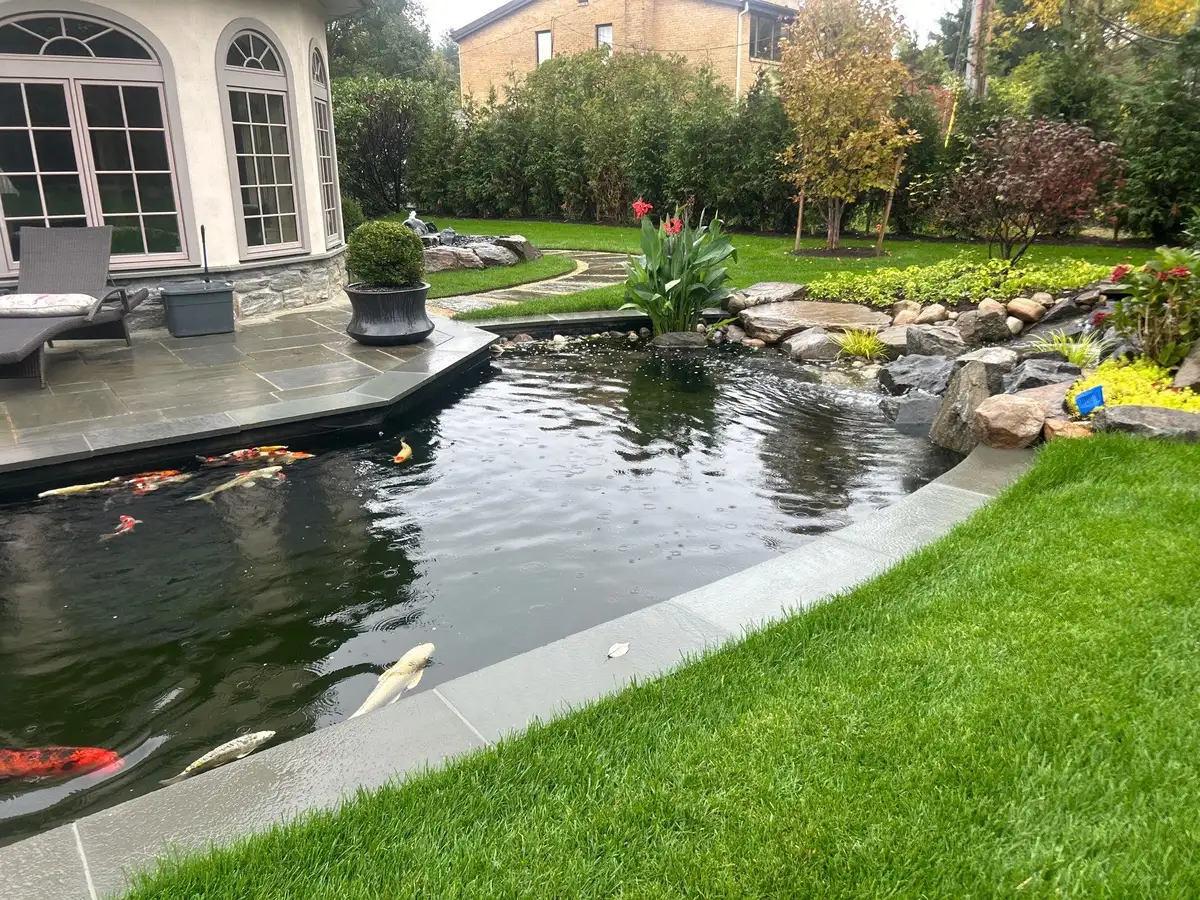
Booking the right pond service starts with the pond’s current condition, not a one-size-fits-all checklist. For Wilmington homeowners, a few clear details about water level, fish, circulation, bottom debris, and the last service can help separate routine maintenance from a cleanout or diagnostic visit.
1. What Should a Pond Maintenance Visit Include?
A useful maintenance visit looks beyond the surface. Depending on the pond, the work may include checking the water level and clarity, pump and waterfall flow, accessible skimmers and filters, plant growth, floating debris, fish behavior, and visible edges. The exact tasks should be agreed on before work begins.
Ask what is included, what is only inspected, and what would require separate approval. Cleaning an accessible skimmer basket is different from replacing a pump. Removing loose leaves is different from correcting years of bottom buildup. Rock Water Ponds’ pond maintenance service covers ongoing care, while larger conditions may point to another service.
2. How Is Pond Maintenance Pricing Determined?
Pond size and depth matter, but they are only the beginning. Fish load, filtration type, equipment access, plant growth, surrounding trees, the amount of debris or sludge, water condition, and time since the last service can all change the labor and equipment required.
That is why a flat price without context is rarely useful. Before requesting an estimate, gather a full view of the pond, close photos of the pump, filter, skimmer, and waterfall, and a short service history. For local service information, review pond maintenance in Wilmington, DE.
3. Can the Pond Bottom Be Cleaned Without Draining It?
Sometimes. Loose leaves and light debris may be removable from reachable areas while the pond remains filled, provided the design, fish, and access allow it. Fine sediment or a deep organic layer is different. Disturbing heavy sludge can cloud the water and place more demand on circulation and filtration.
Do not treat every dark layer as the same problem. Note whether the material is loose leaves, string algae, fine sediment, or thick sludge, and whether it smells strongly or has reduced the pond’s usable depth. Those details help determine whether spot cleaning is reasonable or a controlled pond cleanout is the safer starting point.
4. Is This Routine Maintenance or a Full Cleanout?
Routine maintenance is generally the better fit when the pond is operating, the water level is stable, and debris and plant growth are manageable. A cleanout may be more appropriate when a neglected or newly inherited pond has deep buildup, poor access to submerged debris, persistent odor, restricted circulation, or no recent service history.
A cleanout is not automatically necessary because the water looks green or cloudy. Water clarity can be affected by filtration, circulation, sunlight, fish load, and decaying material. An assessment should identify the condition before the service is chosen.
5. How Often Should a Wilmington Pond Be Maintained?
There is no single interval for every pond. A lightly stocked decorative feature in an open yard has different needs from a koi pond beneath mature trees. Spring startup, warm-weather algae and oxygen pressure, fall leaf drop, and winter preparation also create different tasks through the year.
Ask whether the recommendation is for one seasonal visit, recurring active-season care, or a cleanout followed by maintenance. Wilmington-area yards can also see debris and sediment move during heavy rain, so mention any pattern that appears after storms. The Wilmington service-area page connects local homeowners with the relevant pond and water-feature services.
6. What Information Helps Before the Appointment?
Share the service address, whether fish are present, when the pond was last cleaned or serviced, and what changed. Useful symptoms include reduced waterfall flow, unusual pump noise, repeated topping-off, cloudy water, odor, rapid algae growth, fish gathering near moving water, and debris entering after rain.
Photos should show the whole pond and the equipment area, not only the problem spot. Keep safe access to the pond, filter, and pump available on the appointment day. Follow equipment instructions and leave electrical, pressurized, or unfamiliar components alone.
7. When Should You Book a Different Service First?
Rapid or repeated water loss may need leak diagnostics before ordinary maintenance. A stopped pump, exposed equipment, fish gathering at the surface, or a sudden loss of circulation should be described when you contact the company so the condition can be triaged appropriately.
If rainwater, soil, or mulch is regularly entering the pond, cleaning alone may not correct the source; a broader drainage or stormwater management review may be relevant. To request service, use the Rock Water Ponds contact form and include the Wilmington address, photos, fish and equipment details, and the result you want.