
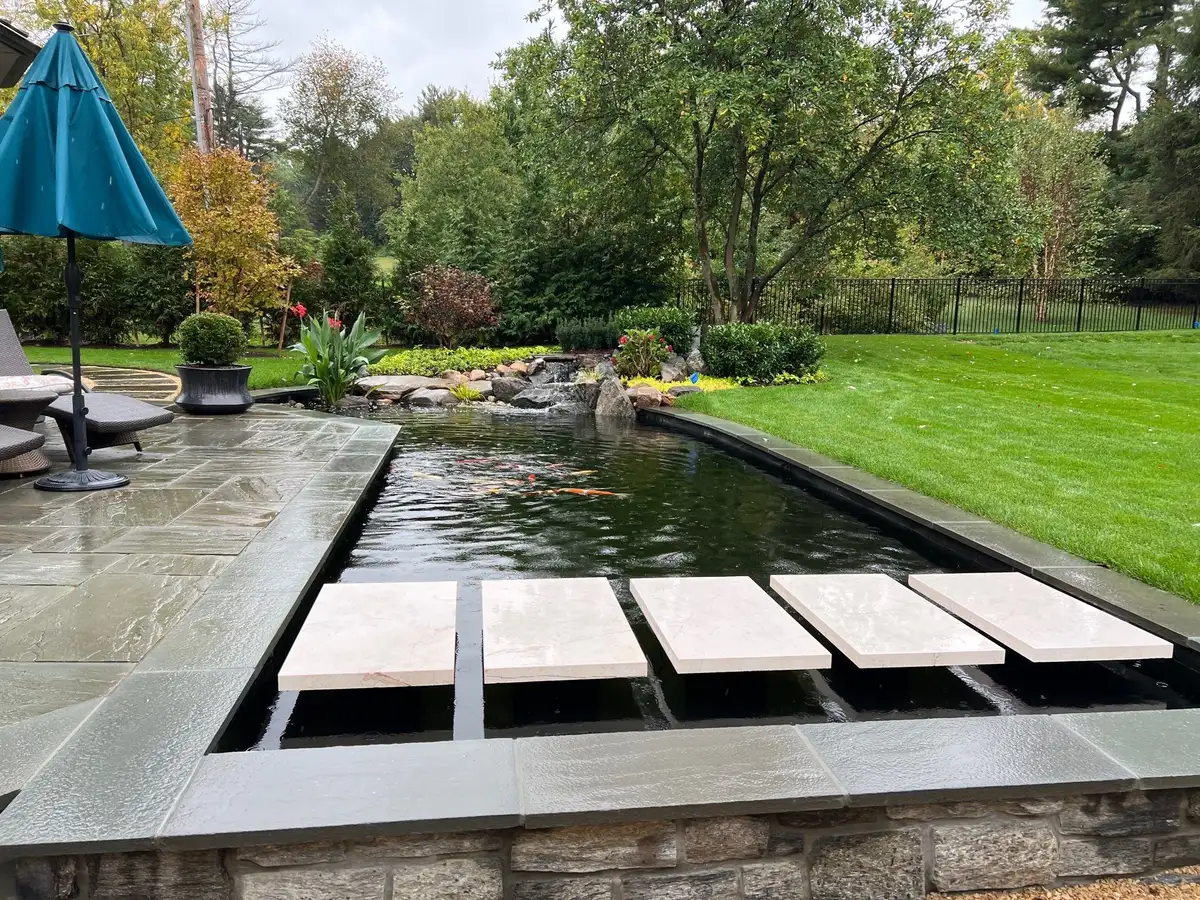
Before you book pond maintenance, identify what has changed and what you want the visit to accomplish. Water clarity, fish behavior, pump flow, bottom debris, water loss, and the time since the last service all help separate routine care from a cleanout or diagnostic visit.
1. What Does a Pond Maintenance Visit Include?
The scope should follow the condition of the pond. A routine visit may focus on water level and clarity, pump and waterfall flow, accessible filters and skimmers, plant growth, floating debris, fish behavior, and visible changes around the edge. Ask which checks and cleaning tasks are included before the appointment begins.
Maintenance is not the same as every service a pond may need. Deep sludge removal, equipment replacement, persistent water-loss investigation, and major plant removal can require separate planning. Rock Water Ponds provides pond maintenance, pond cleanouts, and leak diagnostics, so describing the symptoms helps point the first visit in the right direction.
2. How Much Does Pond Maintenance Cost?
There is no useful flat answer without seeing the pond and understanding the requested work. Size and depth matter, but so do fish load, filtration type, equipment access, plant growth, tree cover, bottom buildup, water condition, and how long the feature has gone without service.
A better estimate starts with clear information. Send a full view of the pond, close photos of the waterfall, skimmer, filter, and pump area, and a short note about fish, water level, recent treatments, and the last known service. That gives the contractor a better chance to distinguish a routine appointment from a larger reset.
3. How Often Should an Outdoor Pond Be Cleaned?
Pond care is better planned around conditions and seasons than a universal cleaning interval. Spring startup, warm-weather algae and oxygen pressure, falling leaves, and winter preparation create different needs. A pond under mature trees or carrying many fish may collect waste and debris faster than a lightly stocked feature in an open yard.
Ask whether the recommendation is for one-time maintenance, recurring active-season care, or a full cleanout. The Wilmington pond maintenance page explains how recurring care can be matched to local pond conditions without assuming every water feature needs the same schedule.
4. Can the Bottom Be Cleaned Without Draining the Pond?
Sometimes, but it depends on the pond design, debris depth, fish, and available access. Light material may be removed from reachable areas while the system stays in service. Heavy sludge is different: disturbing a deep layer can cloud the water and place more demand on circulation and filtration.
Before attempting bottom cleaning, identify whether you are dealing with loose leaves, fine sediment, string algae, or a thick organic layer. Follow equipment instructions and avoid stirring material through the pond. If buildup covers much of the bottom, smells strongly, reduces depth, or returns quickly, ask whether a controlled cleanout is the safer starting point.
5. What Should You Mention About Fish and Equipment?
Tell the service provider what fish are present, whether their behavior has changed, and whether any fish were recently added. Also mention stopped circulation, unusual pump sounds, reduced waterfall flow, cloudy water, odor, or repeated topping-off. Those details can change the urgency and the equipment needed for the visit.
Do not assume fish can stay in place during every type of service. Routine work may be possible with minimal disturbance, while a cleanout or repair can call for a separate protection plan. Rock Water Ponds also offers fish relocation when moving fish is part of the approved service scope.
6. When Is the Problem More Than Routine Maintenance?
Rapid water loss, fish gathering at the surface, a stopped pump, exposed equipment, strong odor, electrical concerns, or a sudden loss of flow should be described before scheduling. After heavy rain, also note whether runoff, soil, or mulch entered the feature. These symptoms may call for diagnostics, repair, or drainage attention rather than a standard cleaning visit.
For local availability and related service paths, review the Wilmington, DE service-area page. When you are ready, use the contact form to share the address, pond photos, fish and equipment details, and the change you want evaluated.