
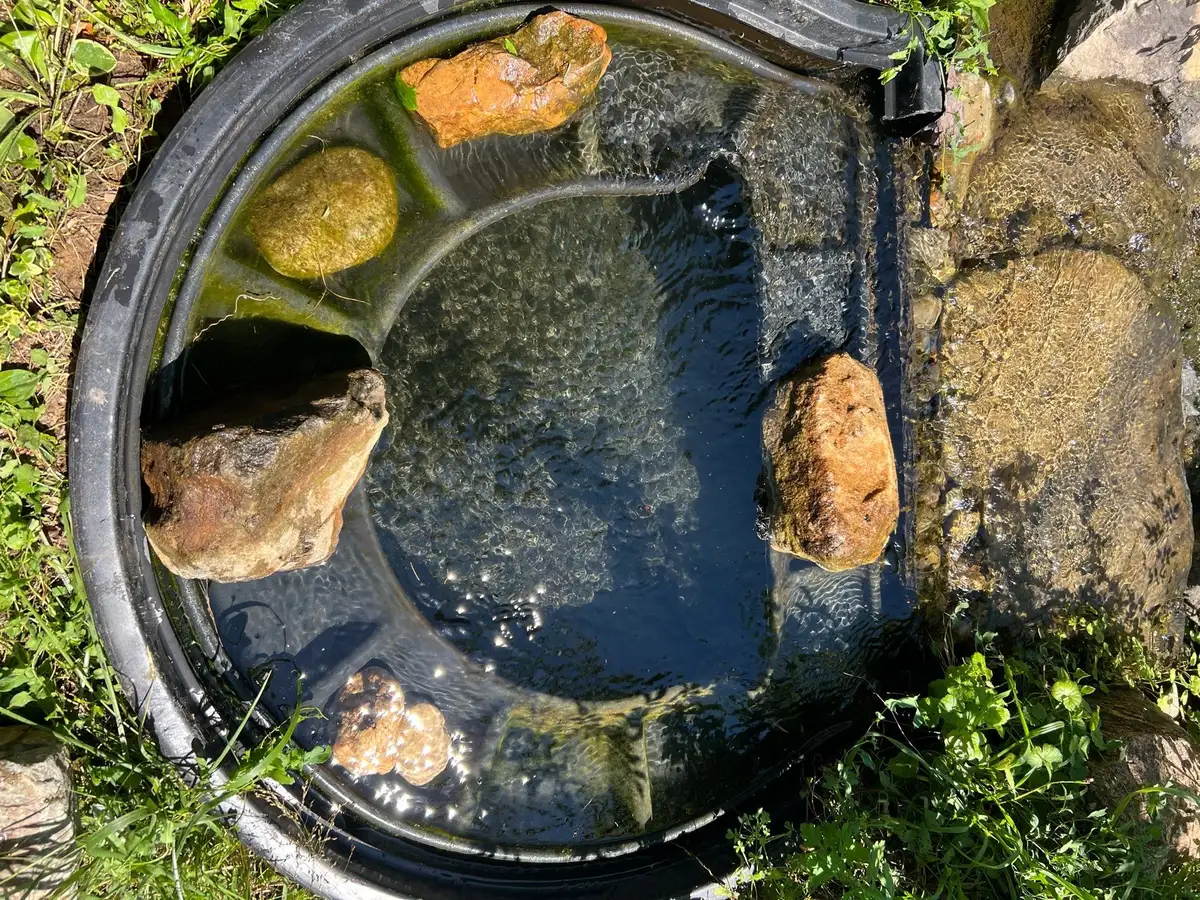
A useful pond maintenance appointment starts before anyone arrives. The condition of the water, fish, pump, filter, plants, bottom debris, and surrounding drainage all help determine whether you need routine care, a cleanout, or a separate diagnostic visit.
1. Which Pond Problem Needs Attention First?
Start with any change that could put fish or equipment at risk. A stopped pump, fish gathering at the surface, a rapidly falling water level, strong odor, or a sudden loss of waterfall flow deserves more attention than ordinary leaf removal. Tell the service provider when the change began and whether it is getting worse.
That description helps identify the right first call. Stable water with seasonal debris may fit pond maintenance. Deep organic buildup may point to a pond cleanout, while repeated water loss may need leak diagnostics before routine care.
2. What Should a Pond Maintenance Checklist Cover?
A maintenance checklist should match the pond rather than repeat the same tasks at every visit. Useful inspection points include the water level and clarity, pump and waterfall flow, skimmer basket, filter condition, visible algae, plant growth, accessible debris, fish behavior, and the condition of the pond edge.
Ask what is included in the visit and what would require a separate scope. Removing light debris is different from addressing deep sludge. Cleaning an accessible filter is different from replacing failing equipment. A clear boundary makes it easier to compare recommendations and understand what the first appointment can realistically accomplish.
3. What Affects the Cost of Pond Maintenance?
Pond maintenance cost depends on the work required, not the city name alone. Size and depth, fish load, filtration type, pump access, plant overgrowth, leaf and sludge buildup, equipment condition, site access, and the time since the last service can all change the scope.
For a more useful estimate, share the Wilmington service address, full-pond photos, close views of the skimmer and filter area, whether fish are present, when the pond was last serviced, and the result you want. That information helps distinguish a routine appointment from a seasonal reset, cleanout, or diagnostic visit without pretending every pond has the same price.
4. How Often Should a Wilmington Pond Be Maintained?
There is no single schedule for every water feature. A small decorative pond with few fish and little tree cover has different demands from a koi pond with a stream, waterfall, heavy plant growth, and mature trees nearby. Filter capacity and how quickly debris collects matter as much as pond size.
A seasonal plan is often more useful than a fixed interval: spring startup, warm-weather checks, fall debris control, and winter preparation each address different conditions. Homeowners with dense tree cover, a high fish load, or frequent skimmer buildup may need closer attention during the active season. Ask whether one-time service or recurring care better matches what the pond is doing.
5. Which Tasks Can a Homeowner Handle Between Visits?
Routine observation goes a long way. Homeowners can watch the water level, empty an accessible skimmer basket, remove floating leaves, note changes in pump sound or waterfall flow, and keep a simple record of algae, odor, and fish behavior. Follow the equipment manufacturer’s directions and avoid opening electrical or pressurized components unless you know the system.
Professional help is the safer choice when the pond has heavy sludge, persistent water loss, failing equipment, unclear plumbing, unsafe access, or fish that may need to be moved. Do not stir deep bottom debris into the water simply to make the pond look cleaner; the disturbed material can place more demand on circulation and filtration.
6. What Does “New Pond Syndrome” Mean for Booking Service?
“New pond syndrome” is a common phrase for water-quality instability while a recently filled pond and its biological filtration are still developing. It can also appear after a major cleanout or system change. Cloudiness or algae alone does not identify the cause, so avoid treating the phrase as a diagnosis.
When booking, mention when the pond was filled or restarted, when fish were added, what filtration is running, and any recent treatments or equipment changes. A service visit can then focus on the actual system conditions instead of applying an unnecessary one-size-fits-all fix.
7. Can Yard Drainage Change What the Pond Needs?
Yes. If pond clarity, water level, or debris changes after a strong rain, note where water is moving across the property. Roof discharge, soil washout, mulch, and sediment entering the feature may create a drainage problem that routine pond cleaning cannot solve. Delaware treats drainage and stormwater as broader property and public-infrastructure concerns, so it is important to keep that issue separate from ordinary pond care.
Photos taken during or just after rain can help explain the pattern. Rock Water Ponds offers stormwater management as a separate service, while the Wilmington service-area page outlines the pond services available locally.