
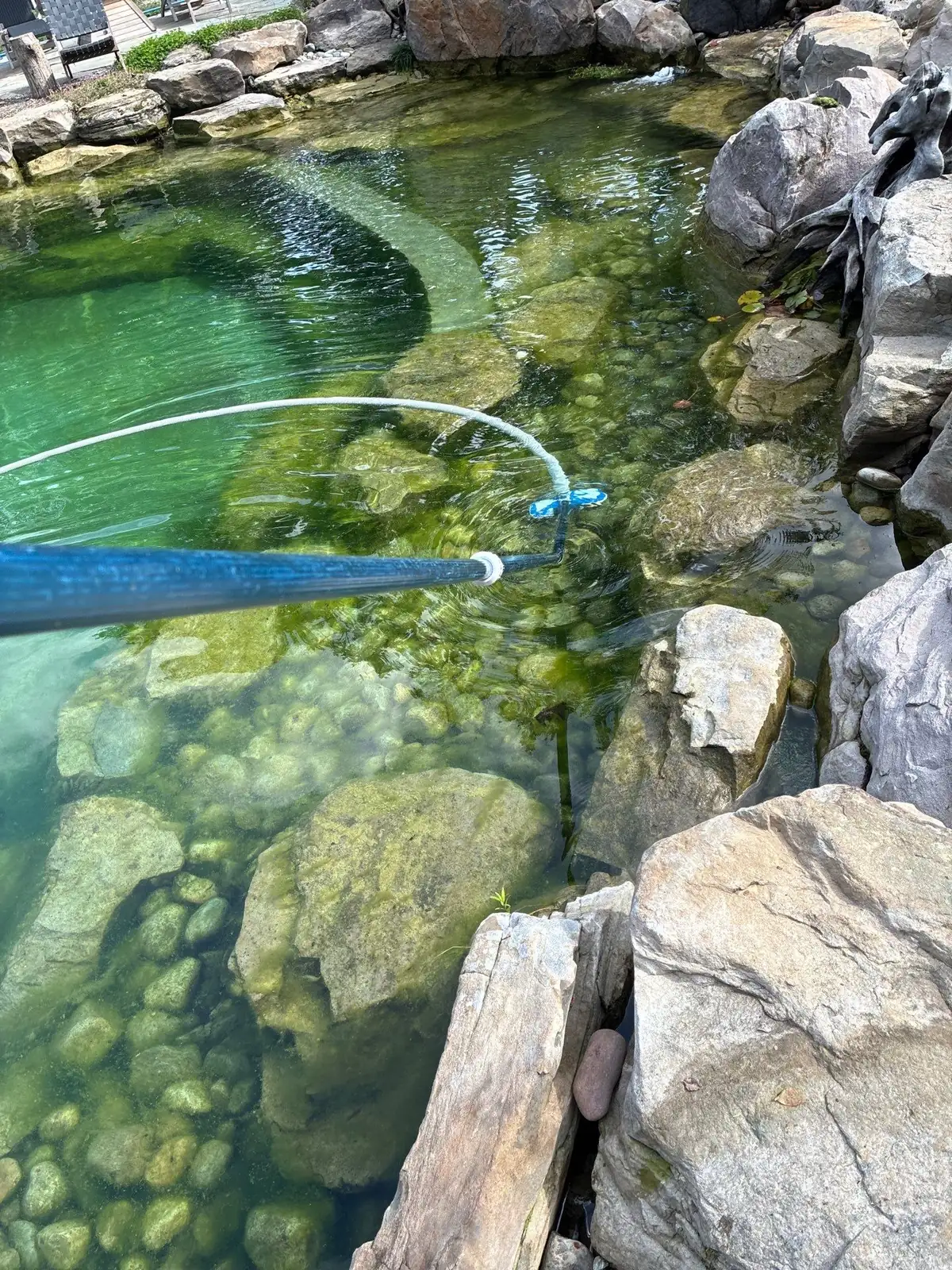
The most useful pond maintenance questions are not about a one-size-fits-all schedule. They help determine what your pond needs now, what should be checked during the first visit, and whether maintenance is the right service at all.
1. Do Ponds Require a Lot of Maintenance?
The honest answer is that maintenance depends on the pond. A small decorative feature with few plants has different needs than a koi pond with a waterfall, skimmer, biological filter, and heavy fish load. Shade, falling leaves, sunlight, pump flow, and the age of the equipment also change the workload.
For Wilmington homeowners, it is more useful to plan around the seasons than to expect the same checklist every visit. Spring startup, warm-weather algae and oxygen pressure, fall debris, and winter preparation each call for different attention. Ask whether your pond needs occasional seasonal service or a recurring pond maintenance schedule.
2. What Should the First Maintenance Visit Check?
A first visit should look at the whole circulation system, not only skim the surface. Useful checks include the water level, pump and waterfall flow, skimmer, filter condition, plant growth, visible algae, bottom debris, fish behavior, and access around the pond.
That assessment helps separate a routine cleaning need from a filtration, equipment, cleanout, or water-loss problem. When you request pond maintenance in Wilmington, DE, describe what changed and what outcome matters most: clearer water, dependable flow, seasonal care, or help understanding a pond that came with the property.
3. What Naturally Helps Keep Pond Water Clear?
No single plant, treatment, or “natural” product replaces a balanced system. Clearer pond water usually depends on several parts working together: adequate circulation, mechanical and biological filtration, controlled fish waste, removal of decaying leaves, and healthy aquatic plants that use available nutrients.
Plants can support shade and nutrient balance, but too much growth can trap debris or restrict water movement. If the pond needs a better plant plan, Rock Water Ponds also provides aquatic plant service. Ask whether the clarity problem is being caused by excess nutrients, weak flow, heavy sludge, or filtration that no longer matches the pond.
4. Can Bottom Sludge Be Removed During Routine Maintenance?
Light, accessible debris may be handled during maintenance, but deep sludge is a different scope. Years of decomposing leaves, fish waste, and plant material can reduce depth, create odor, feed algae, and place extra demand on filtration. Stirring a heavy layer into the water may make conditions worse.
Ask how the sludge depth will be assessed and whether a pond cleanout should come before recurring care. A cleanout is often the better starting point for a neglected or newly inherited pond; maintenance is what helps prevent the same buildup from returning.
5. Is This a One-Time Visit or Ongoing Pond Care?
A one-time visit may be enough for a seasonal startup, filter issue, plant trim, or general assessment. Recurring care is more useful when the pond has koi, dense tree cover, regular leaf and pollen pressure, frequent skimmer buildup, or a system that benefits from being observed throughout the year.
Before agreeing to a schedule, ask what changes from visit to visit and what is outside the maintenance scope. The answer should make it clear when a separate cleanout, equipment repair, fall netting, winter shutdown, or diagnostic visit would be recommended.
6. When Is Water Loss a Leak-Diagnostics Question?
Maintenance can address debris, flow, plants, and filtration, but it should not be used to mask persistent water loss. If the pond level drops repeatedly, note how much water is added, whether the loss changes when the pump runs, and whether wet ground appears near the waterfall, stream, plumbing, or pond edge.
Share those details before the appointment. Rock Water Ponds may recommend leak diagnostics before ordinary maintenance if the water level is putting fish or equipment at risk. Homeowners can also review the full Wilmington pond service area before requesting a visit.