
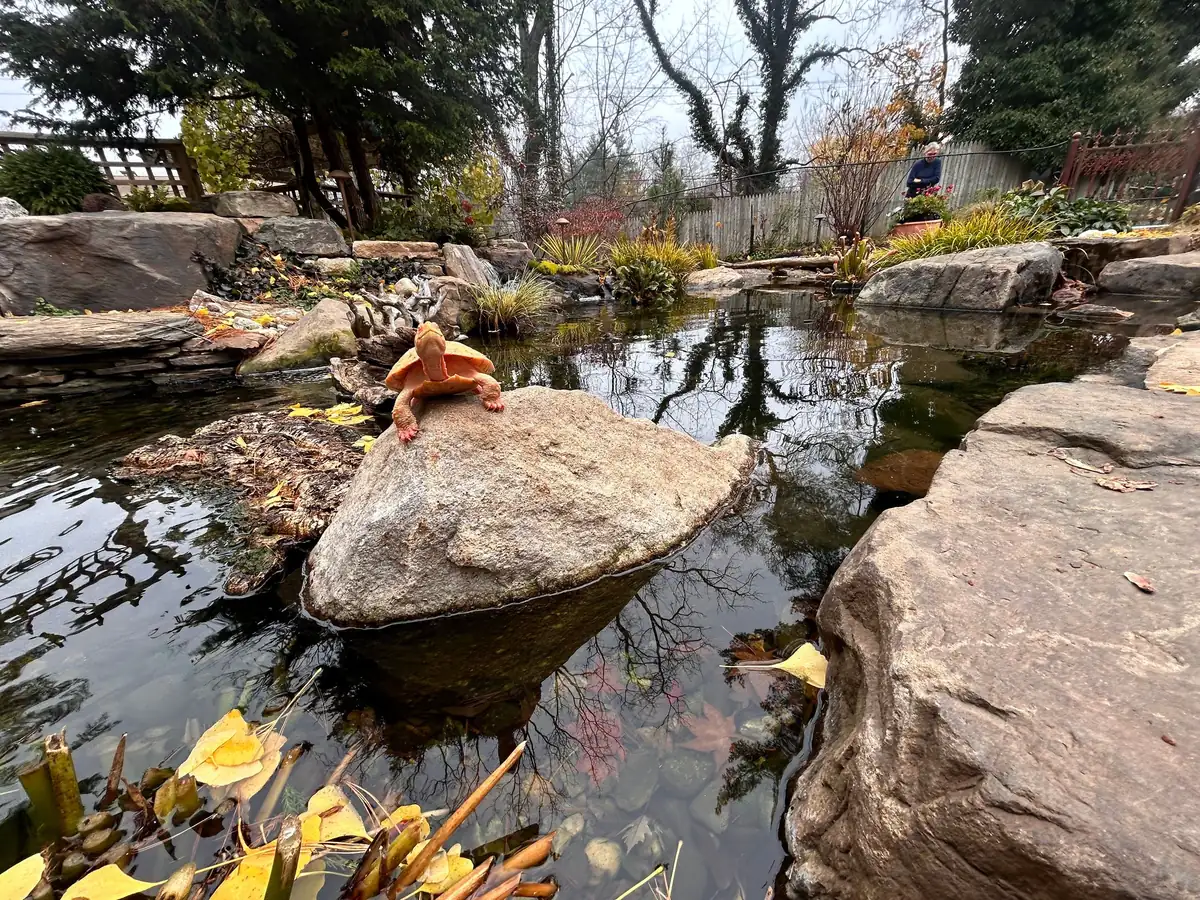
A successful pond starts before excavation. The useful first questions are not only about shape and stone—they are about how water already moves across the property, how the system will circulate, what care it will need, and which site constraints have to be resolved first.
For Wilmington homeowners, that planning matters on properties with mature trees, sloped yards, limited equipment access, or runoff after a hard rain. Use the questions below to compare a proposed build on function as well as appearance.
Which Type of Water Feature Fits the Way You Want to Use the Yard?
Start with the experience you want. A fish pond has different circulation, depth, filtration, plant, and maintenance considerations from a pondless waterfall or a compact recirculating feature. A waterfall built mainly for sound may prioritize the view from a patio and control of splash, while a planted pond also needs suitable shelves, sunlight, and access for routine care.
Describe where you expect to see and hear the water, whether children or pets use the yard, whether fish or aquatic plants are part of the plan, and how much hands-on care you want. Rock Water Ponds’ pond and water feature construction service includes ecosystem ponds, pondless waterfalls, and fountainscapes, giving the planning conversation a concrete starting point.
What Site Conditions Should Be Reviewed Before Design?
The location affects both construction and long-term performance. Access for excavation and material delivery, existing utilities, grade changes, tree roots, soil conditions, nearby structures, and the route for displaced soil all belong in the early discussion. Equipment also needs a serviceable location; hiding it completely is not helpful if filters, pumps, or valves become difficult to reach.
Watch the yard during rain before choosing the final location. If roof runoff, a downspout, or surface flow crosses the proposed footprint, the design should account for that water instead of allowing sediment and nutrients to wash into the feature. Wilmington’s public infrastructure includes stormwater collection and flood-resiliency work, but conditions on a private lot still need property-specific review. Where drainage is already a concern, discuss whether a separate stormwater management solution is appropriate.
Do You Need a Permit to Put a Pond on the Property?
Do not assume the answer from the feature’s size alone. Requirements can depend on the address, proposed location, excavation and grading, utilities, electrical work, drainage impacts, easements, protected areas, or rules that apply to the property. A neighborhood association may also have its own review process.
Before work begins, confirm current requirements with the City of Wilmington and any other authority that applies to the project. The goal is to identify approvals and constraints while the design can still respond to them—not after excavation has started.
How Should Pumps, Filtration, Plumbing, and Electrical Needs Be Planned?
A recirculating feature needs a dependable path for moving water. The pump, plumbing, filtration, skimming, and return points should be considered as one system. Fish load, desired waterfall flow, feature volume, elevation change, and the amount of organic debris can all affect equipment choices.
Ask where each component will be located, how it will be accessed for service, and what happens if the pump stops. If the plan includes lighting, aeration, ultraviolet treatment, an automatic fill, or other equipment, confirm how those elements affect plumbing and electrical scope. An attractive edge and waterfall cannot compensate for a system that is undersized or difficult to maintain.
How Much Does a 3,000-Gallon Pond Cost to Build?
Gallons are useful for equipment sizing, but they do not produce a reliable construction price by themselves. Two ponds with similar volume can have very different excavation access, depth, shape, elevation change, stone requirements, filtration, plumbing runs, electrical needs, waterfalls, planting, and soil-removal demands.
Ask for an estimate that explains what is included and which site conditions could change the scope. Useful line items or descriptions may address excavation, liner and underlayment, rock and gravel, pumps and filtration, plumbing, electrical coordination, water treatment at startup, plants, fish accommodations, finish grading, and disposal or relocation of excavated soil. That gives you a better comparison than a price tied only to gallons.
What Common Water Feature Problems Can Good Planning Reduce?
- Poor circulation: Dead zones and weak surface movement can make debris and water-quality issues harder to manage.
- Runoff entering the pond: Soil, mulch, fertilizer, and organic material can wash into a feature when grades and drainage are overlooked.
- Difficult equipment access: Pumps and filters need to be reachable for cleaning, adjustment, and eventual replacement.
- Uncontrolled splash or sound: Waterfall height, flow, stone placement, wind, and the receiving pool all affect where water lands and how the feature sounds.
- Visible liner or unstable edges: Edge elevations and stone placement should be resolved as part of the build, not treated as decoration at the end.
- A maintenance mismatch: A feature with fish, plants, heavy leaf drop, or complex filtration may require more care than the homeowner expected.
What Maintenance Will the New Feature Need?
Every recirculating water feature needs observation and care. The exact schedule depends on the design, fish and plants, sunlight, surrounding trees, filtration, and the changing seasons. Ask how to check water level and flow, which baskets or filters need cleaning, how debris should be removed, and what to do before freezing weather.
Also ask what normal operation should look and sound like. A clear baseline makes it easier to notice reduced flow, unusual pump noise, repeated water loss, or a change in water quality. Homeowners who want help after construction can review ongoing pond maintenance and seasonal service options.
What Should You Share Before a Construction Consultation?
Provide the Wilmington service address, wide photos of the yard, the path from the street or driveway to the proposed feature, and views of nearby slopes, downspouts, patios, fences, and utilities you know about. Explain the kind of feature you are considering, the view and sound you want, whether fish or plants are planned, and how much maintenance you expect to handle.
Rock Water Ponds serves Wilmington as part of its broader northern Delaware and nearby Pennsylvania service area, with scheduling confirmed by address and project scope. Review the Wilmington pond service page, then use the contact form to discuss your pond or water feature or call (484) 844-3863.